About
MIT President
Sally Kornbluth
Sally Kornbluth
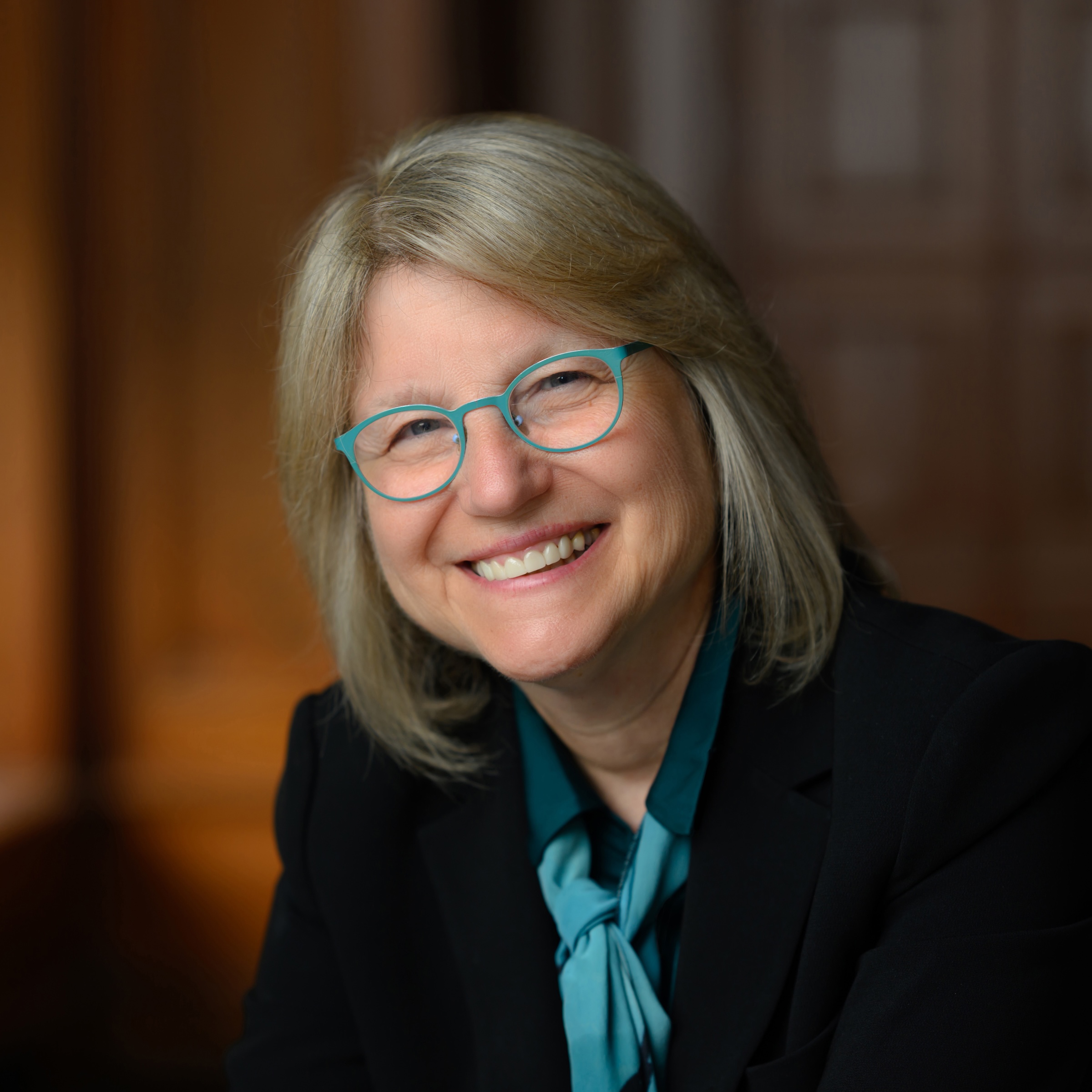
MIT President Sally Kornbluth
Since becoming MIT’s 18th president in January 2023, Sally Kornbluth has rallied the community to help solve the great challenges of our time. She and her leadership team have launched a series of initiatives intended to enable faculty to “go big” with their most daring ideas and to inspire new collaborations across disciplines and institutions.
She began by creating the Climate Project at MIT with the aim of driving technological, behavioral and policy solutions to help change the expected trajectory of global climate outcomes. In 2024, she introduced the
MIT Human Insight Collaborative (MITHIC) to spark unexpected collaborations between MIT faculty in the arts, humanities, and social sciences and colleagues in other disciplines. And she led the launch of the MIT Health and Life Sciences Collaborative (MIT HEALS), designed to accelerate and deliver solutions, at scale, to society’s most urgent, intractable health challenges.
In 2025, Kornbluth introduced the MIT Generative AI Impact Consortium (MGAIC, called “magic”) to explore how generative AI can spawn transformative solutions to real-world challenges and to help ensure that the societal impact of these new technologies is broadly beneficial. She also launched the MIT Initiative for New Manufacturing, an ambitious effort to make manufacturing more productive, resilient and sustainable in communities of every size across the United States and beyond. And in December of that year, she launched QMIT (“kew-mitt”) to foster new ways of applying quantum breakthroughs to the most consequential challenges in science, technology, industry and national security. Throughout her term as president, she has championed the Institute’s commitment to freedom of expression, while making sure everyone remains free to do their best work.
A native of Fair Lawn, New Jersey, Kornbluth graduated from Williams College in 1982 with a BA in political science. Making a sharp pivot toward biology, she received a scholarship to attend Cambridge University, where she earned a BA in genetics in 1984. In 1989, Kornbluth received her PhD in molecular oncology from Rockefeller University and then completed postdoctoral training at the University of California, San Diego. She joined Duke University in 1994 as an assistant professor of pharmacology and cancer biology, and by 2005 had risen to full professor. She stepped into administration the following year as vice dean for basic science at the Duke School of Medicine, a post she held until she became provost in 2014.
In her research, Kornbluth focused on processes that are key to understanding cancer as well as various degenerative disorders. She has published extensively on how cancer cells evade apoptosis and how metabolism regulates the cell death process. Among other honors, she is a member of the National Academy of Medicine, the National Academy of Inventors, and the American Academy of Arts and Sciences. In 2025, she received an honorary doctorate from Baylor College of Medicine.
Kornbluth lives in Gray House with her husband, Daniel Lew, a professor in MIT’s Department of Biology. They have two grown children.
Today, the problems before us – the problems of human society, and of its only planet so far – require that we harness our curiosity in exceptionally productive ways. The people of MIT have always wanted to know how things work, and how we can be part of big solutions. Now, it’s imperative that we know – and that we help lead the world to action.”